Jamjo ane Jamarjo Logo
Jamjo ane Jamarjo A Legacy of Bohra Flavours By Chefjuzer

✨Chilled Sheer Korma✨

By Chefjuzer • •
🏷️ Category: Halwas 🌱 Type: Vegetarian ⏱️ Prep: 25 minutes 🔥 Cook: 45 minutes
✨Chilled Sheer Korma✨

This is a unique take on the traditional Sheer Korma - a deconstructed dessert that brings together three luscious elements: creamy Kulfi, aromatic Sev Zarda, and fragrant Masala Milk, topped with rich dry fruits. Served chilled, it’s a perfect festive finale.

Ingredients List
People
💡 Adjust serving size to recalculate ingredients
Sr. Weight Units Name
For Kulfi
• 2 litres full fat milk
• 250 g grated mava (khoya)
• 1.5 cups sugar
For Masala Milk
½ litre full-fat milk
½ cup sweet milk masala (preferably homemade or Rainbow brand)
½ cup sugar (adjust to taste)
½ tsp saffron strands (kesar), soaked in lukewarm water
For Zarda Sev (Sweet Vermicelli)
½ packet thin vermicelli
• 1 cup pure ghee
• 3 cups hot water
½ cup sugar
Method / Instructions
  1. 1. Prepare the Kulfi: In a heavy-bottomed pan, bring the milk to a boil. Reduce the heat and simmer, stirring often, until it reduces to one-third of its original volume. Add sugar and grated mava, and continue simmering until the sugar dissolves completely and the mixture thickens into rabdi. Cool to room temperature, then pour into kulfi moulds and freeze until set. To unmould, dip the moulds briefly in water or rub the outer surface with wet hands.
  2. 2. Prepare the Masala Milk: Boil the milk in a thick-bottomed vessel. Lower the heat and add the milk masala, sugar, and soaked saffron. Stir continuously until everything dissolves and blends well. Remove from heat, cool to room temperature, and chill before assembling.
  3. 3. Prepare the Zarda Sev: Heat ghee in a heavy kadhai. Lightly crush the vermicelli and add it to the hot ghee. Roast over medium heat until golden brown and aromatic. Slowly add hot water and mix well. Add sugar, stir, cover, and simmer until the vermicelli is soft and all the water is absorbed. Fluff lightly and cool to room temperature.
  4. 4. Prepare the Garnish: Grate the dry fruits, including almonds, pistachios, cashews, and soaked raisins, and keep aside.
  5. 5. Assemble and Serve: In a flat serving bowl, add 1–2 spoonfuls of Zarda sev as the base. Place a piece of chilled kulfi on top and sprinkle generously with grated dry fruits. Pour 2 tablespoons of chilled Masala Milk over the dessert and serve immediately.
Nutrition Facts (Per 100 gms servings)
Nutrient (Basic) Amount (Approx.)
🔥 Calories232 Kcal
💪 Protein4.8 g
🌾 Carbohydrates27.6 g
🥑 Total Fat11.8 g
🧈 Saturated Fat6.9 g
🌱 Dietary Fibre0.4 g
🍬 Total Sugars22.1 g
🧂 Sodium54 mg

*Disclaimer: The nutritional values provided here are estimates generated for reference only and may vary based on exact ingredient brands and preparation techniques. Please calculate your nutrition independently if following a strict diet.

Chef's Notes & Tips

Chef’s Note

  • Adjust the sugar in each component individually, especially if preparing ahead and combining later.
  • Best served cold, making it a refreshing twist on the traditional hot Sheer Korma.
  • You can assemble ahead and chill for 15–20 minutes before serving.

✨Thuli - Lapsi✨

By Chefjuzer • •
🏷️ Category: Mithaas 🌱 Type: Vegetarian ⏱️ Prep: 30 minutes 🔥 Cook: 45 mins
✨Thuli✨
(Lapsi)

A classic celebration sweet, Thuli is made with broken wheat (daliya) slow-cooked in ghee, milk, and jaggery. It’s a comforting, mildly sweet dish often enjoyed on special occasions with Chana Bateta. Its aroma of cardamom and rose water instantly fills the kitchen with celebration.

Ingredients List
People
💡 Adjust serving size to recalculate ingredients
Sr. Weight Units Name
• 150 g Broken Wheat (Daliya)
• 3 tbsp Ghee
½ tsp Cardamom Powder or Seeds
• 1 tbsp Rose Water
• 80 g Grated Jaggery
• 50 ml Milk
• 12 -15 Soaked Raisins
• 35 g Chopped Dry Fruits
Grated Dry Coconut, as per taste
Hot Water, as required
For Garnish
Dry fruits: raisins, charoli, sliced almonds, sliced pistachios
Method / Instructions
  1. 1. Prepare the Jaggery and Soak the Thuli: Grate the jaggery and keep aside. Soak the thuli in water for 1 hour before cooking.
  2. 2. Sauté the Thuli: Drain the soaked thuli completely. Heat ghee in a heavy-bottomed rice pot or saucepan over medium-low heat. Add the drained thuli and sauté gently, stirring continuously until it turns light brown and releases a nutty aroma.
  3. 3. Add Water and Jaggery: Gradually add about 2 cups of hot water, stirring constantly to prevent sticking. Once combined, add the grated jaggery and mix well. If the mixture thickens, add more hot water as needed.
  4. 4. Simmer: Cover the pot and cook on a very low to medium flame for 5 minutes.
  5. 5. Check the Softness: Stir gently and check if the thuli grains are soft. If needed, add an additional ½ cup of hot water.
  6. 6. Dum Cook: Cover again and cook for another 5–7 minutes on low heat.
  7. 7. Add Flavoring: Once cooked, optionally stir in milk combined with rose water, then sprinkle in the cardamom powder to infuse fragrance.
  8. 8. Serve: Garnish with your choice of dry fruits and serve warm.
Nutrition Facts (Per 100 gms servings)
Nutrient (Basic) Amount (Approx.)
🔥 Calories195 Kcal
💪 Protein3.8 g
🌾 Carbohydrates30.2 g
🥑 Total Fat7.4 g
🧈 Saturated Fat3.9 g
🌱 Dietary Fiber3.1 g
🍬 Sugars14.8 g
🧂 Sodium22 mg

*Disclaimer: The nutritional values provided here are estimates generated for reference only and may vary based on exact ingredient brands and preparation techniques. Please calculate your nutrition independently if following a strict diet.

Chef's Note

If you prefer a deeper flavor, replace part of the jaggery with brown sugar. Always cook Thuli on a slow flame to avoid sticking or burning. It tastes best when served warm, topped with coconut and a rose petal.

✨Kheer✨

By Chefjuzer • •
🏷️ Category: Mithaas 🌱 Type: Vegetarian ⏱️ Prep: 2 hours soaking 🔥 Cook: 1 hour 30 minutes
✨Kheer✨

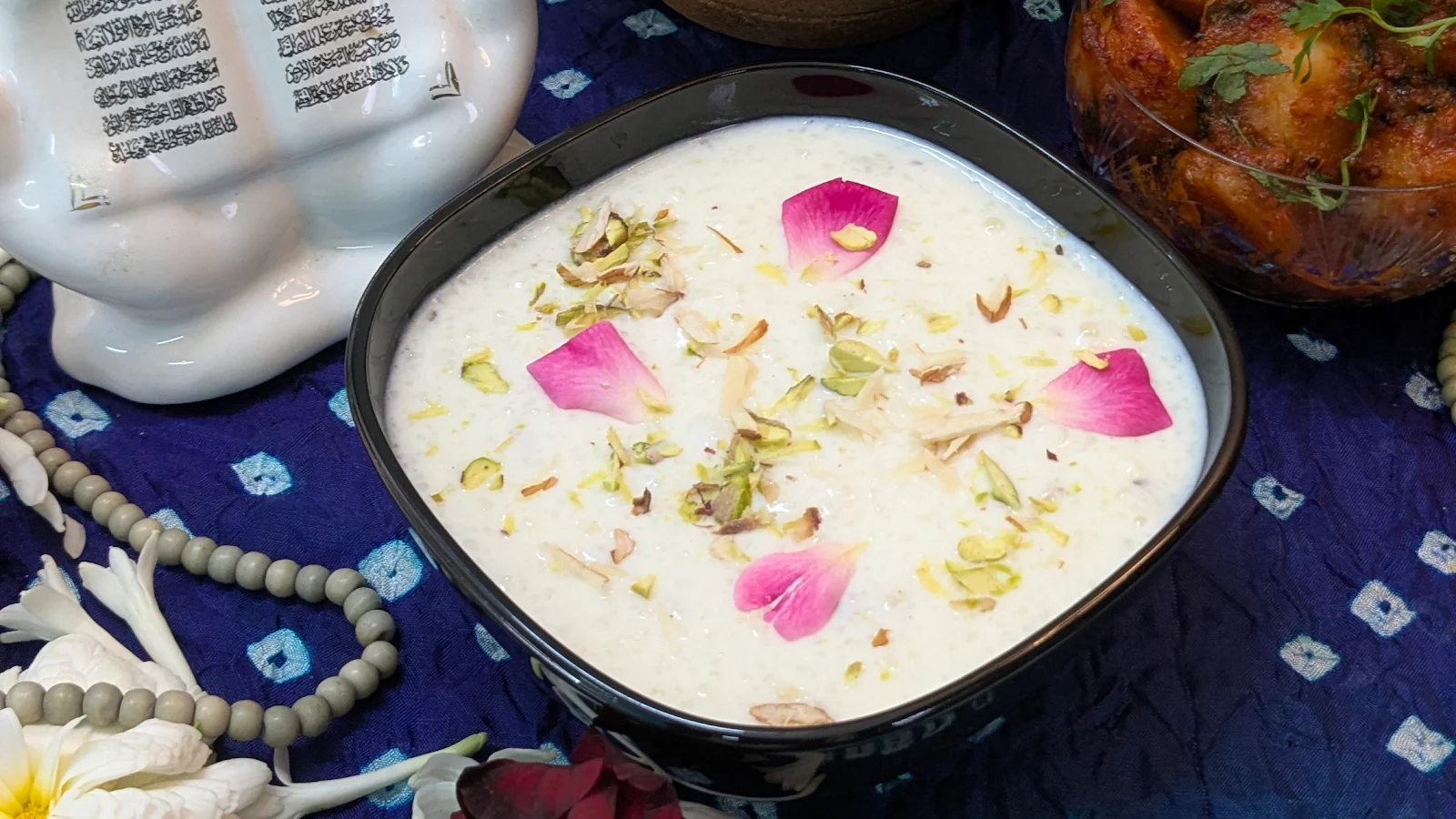
A timeless classic in Indian desserts, kheer is a comforting rice pudding slow-cooked with milk and fragrant with saffron and rose water. The rich texture and the gentle sweetness make it perfect for festive meals or family gatherings - served hot or chilled, always with love.

Ingredients List
People
💡 Adjust serving size to recalculate ingredients
Sr. Weight Units Name
Main Ingredients
• 1 litre fresh full cream milk
• 50 g short grain basmati rice
• 1 ½ tbsp pure ghee
½ tsp cardamom powder
• 1 gm saffron strands (soaked in 1 tbsp warm milk or water)
• 2 tsp rose water
Sugar as per taste
For Garnish
Choice of nuts (almonds, pistachios, cashews)
Raisins
Few strands of saffron
Method / Instructions
  1. 1. Soak and prepare the rice: Soak rice in water for 2 hours. Then strain using muslin cloth and spread on a kitchen towel to dry completely. Once dried, coarsely grind using a mortar and pestle. Set aside.
  2. 2. Start the base: Heat ghee in a thick-bottomed saucepan over medium-low heat. Add ground rice and sauté gently for 1 minute to coat it in the ghee.
  3. 3. Add milk and cook: Pour in the milk and stir continuously for 2–3 minutes. Increase the heat and bring the milk to a boil while stirring.
  4. 4. Simmer and reduce: Once milk rises and is about to spill, reduce to low heat and continue stirring. Frequently scrape down the sides and bottom of the pot to prevent sticking or burning.
  5. 5. Slow cooking: Let the milk simmer slowly, stirring occasionally, until it reduces to about 70% of its original volume and turns pale. The rice should be soft and completely cooked.
  6. 6. Finish the kheer: Add sugar as per your taste, then stir in soaked saffron, cardamom powder, and rose water. Simmer for another 2–3 minutes.
  7. 7. Serve: Garnish with chopped nuts, raisins, and a few saffron strands. Serve warm with puris or chilled as a dessert.
Nutrition Facts (Per 100 gms servings)
Nutrient (Basic) Amount (Approx.)
🔥 Calories142 Kcal
💪 Protein3.6 g
🌾 Carbohydrates18.5 g
🥑 Total Fat6.2 g
🧈 Saturated Fat3.6 g
🌱 Dietary Fiber0.4 g
🍬 Sugars13.8 g
🧂 Sodium48 mg

*Disclaimer: The nutritional values provided here are estimates generated for reference only and may vary based on exact ingredient brands and preparation techniques. Please calculate your nutrition independently if following a strict diet.

Chef's Note

Always use short grain rice for a creamy consistency. Stirring frequently while cooking is key to avoiding scorching. Adjust sugar depending on your preference or the sweetness of the milk. For a richer version, add a spoon of mawa or condensed milk near the end. Garnishing with silver varak and rose petals can elevate presentation for festive occasions.

✨Malido✨

By Chefjuzer • •
🏷️ Category: Mithaas 🌱 Type: Vegetarian ⏱️ Prep: 45 minutes 🔥 Cook: 1 hour 15 minutes
✨Malido✨

Butter Malido is a rich and celebratory sweet from the Parsi and Bohri traditions, known for its nutty flavor, ghee-soaked texture, and signature "muthiyas" - deep-fried wheat-rava dumplings that are crushed and blended into a fragrant jaggery syrup. A festival staple and winter favorite, this dish is best enjoyed warm.

Ingredients List
People
💡 Adjust serving size to recalculate ingredients
Sr. Weight Units Name
For the Dough
• 400 g wheat flour (atta)
• 150 g rava (semolina/suji)
• 50 g pure ghee
Pinch of salt
• 1 cup warm milk (adjust as needed)
For the Jaggery Syrup (Pak)
• 400 g jaggery (grated)
• 100 g butter
For the Mix-Ins
• 3 tbsp milk powder
• 50 g white gum granules (goondar)
Ghee for deep frying
Dry fruits
Raisins (kismis)
Charoli
Almonds, sliced
Pistachios, sliced
Method / Instructions
  1. 1. Prepare the dough: In a large mixing bowl, combine wheat flour, rava, a pinch of salt, and 50 g of ghee. Rub the mixture together until it is crumbly. Gradually add warm milk and knead into a tight, firm dough. Adjust milk as needed.
  2. 2. Shape the muthiyas: Divide the dough into portions slightly larger than golf ball-sized. Press each ball tightly in your fist to form oval, fist-shaped dumplings (muthiyas). Set aside.
  3. 3. Fry the goondar: Heat ghee in a deep frying pot. Once hot, add the white gum granules (goondar). Fry until they puff up completely, then remove with a slotted spoon and keep aside.
  4. 4. Fry the muthiyas: Reduce heat to medium-low. Fry 4–5 muthiyas at a time until they are golden brown on all sides. Remove and cool completely. Repeat for all.
  5. 5. Crush the muthiyas: Once cooled, use a mortar and pestle to crush the muthiyas into coarse crumbs. Transfer to a large mixing vessel (lagan or wide bowl).
  6. 6. Combine the dry mixture: To the crushed muthiyas, add milk powder, fried goondar, raisins, and sliced dry fruits. Mix thoroughly and keep aside.
  7. 7. Make the jaggery pak (syrup): In a large pot, melt the butter on medium-low heat. Add grated jaggery and stir continuously until fully melted and smooth - no lumps should remain.
  8. 8. Mix the malido: Add the prepared crumb mixture into the jaggery pak. Mix thoroughly. The mixture will fe1. el tight initially, but will soften as it blends. Stir and fold until uniform.
  9. 9. Final cook and serve: Cover and allow the malido to steam on the lowest flame for 5 minutes. Apply one final mix, ensuring that nothing adheres to the base. Serve warm.
Nutrition Facts (Per 100 gms servings)
Nutrient (Basic) Amount (Approx.)
🔥 Calories465 Kcal
💪 Protein6.8 g
🌾 Carbohydrates54.2 g
🥑 Total Fat25.1 g
🧈 Saturated Fat13.8 g
🌱 Dietary Fiber3.6 g
🍬 Sugars28.5 g
🧂 Sodium85 mg

*Disclaimer: The nutritional values provided here are estimates generated for reference only and may vary based on exact ingredient brands and preparation techniques. Please calculate your nutrition independently if following a strict diet.

Chef's Note

Muthiyas can be made a day ahead for convenience. Use a wide, heavy-bottomed pot for even heat distribution. You can add a few drops of rose water or nutmeg powder for a variation in aroma. Malido stores well in an airtight container at room temperature for 3–4 days, or refrigerated for up to a week. Best served warm with a drizzle of melted ghee and extra nuts on top.

✨Khajuri Kalamro✨

By Chefjuzer • •
🏷️ Category: Mithaas 🌱 Type: Vegetarian ⏱️ Prep: 15 minutes 🔥 Cook: 20 minutes Plus Chilling Time: 2 hours
✨Khajuri Kalamro✨

Kalamro is one of the simplest yet most cherished sweet preparations in our tradition. It is closely associated with Rabi ul Awwal and Milad un-Nabi, when families and communities come together in celebration. Traditionally, Kalamro holds a special place at these occasions, often served at the beginning of the meal as the mithaas, before the savoury courses. Its charm lies in its simplicity. Kalamro does not need elaborate cooking or extravagance to feel special. Its true identity comes from the occasion, the tradition of sharing, and the memories created around the table. Khajuri Kalamro is our interpretation of that tradition. The spirit of Kalamro remains rooted in our celebrations, while its sweetness takes a new form through khajur. The tradition remains the same. The mithaas takes a new form.

Ingredients List
People
💡 Adjust serving size to recalculate ingredients
Sr. Weight Units Name
For the Kalamro
• 200 g Rice, washed and cooked until soft
• 200 g Thick Full-Fat Dahi
• 100 g Fresh Malai
• 250 g Khajur Paste, or to taste
• 1 tsp Rose Water
For Garnishing
Pomegranate – as required
Almonds – sliced, as required
Pistachios – sliced, as required
Raisins – as required
Rose Petals – a few, optional
Method / Instructions
  1. 1. Wash the rice thoroughly and cook it until completely soft. Allow it to cool.
  2. 2. Transfer the cooked rice to a mixing bowl. Add the thick dahi, fresh malai and khajur paste.
  3. 3. Mix everything thoroughly until well combined. Add rose water and mix again.
  4. 4. Taste the Kalamro and adjust the amount of khajur paste according to the sweetness and tartness of the dahi.
  5. 5. Cover and refrigerate for at least 2 hours so that the Kalamro becomes properly chilled and the flavours settle.
  6. Garnish and Serve
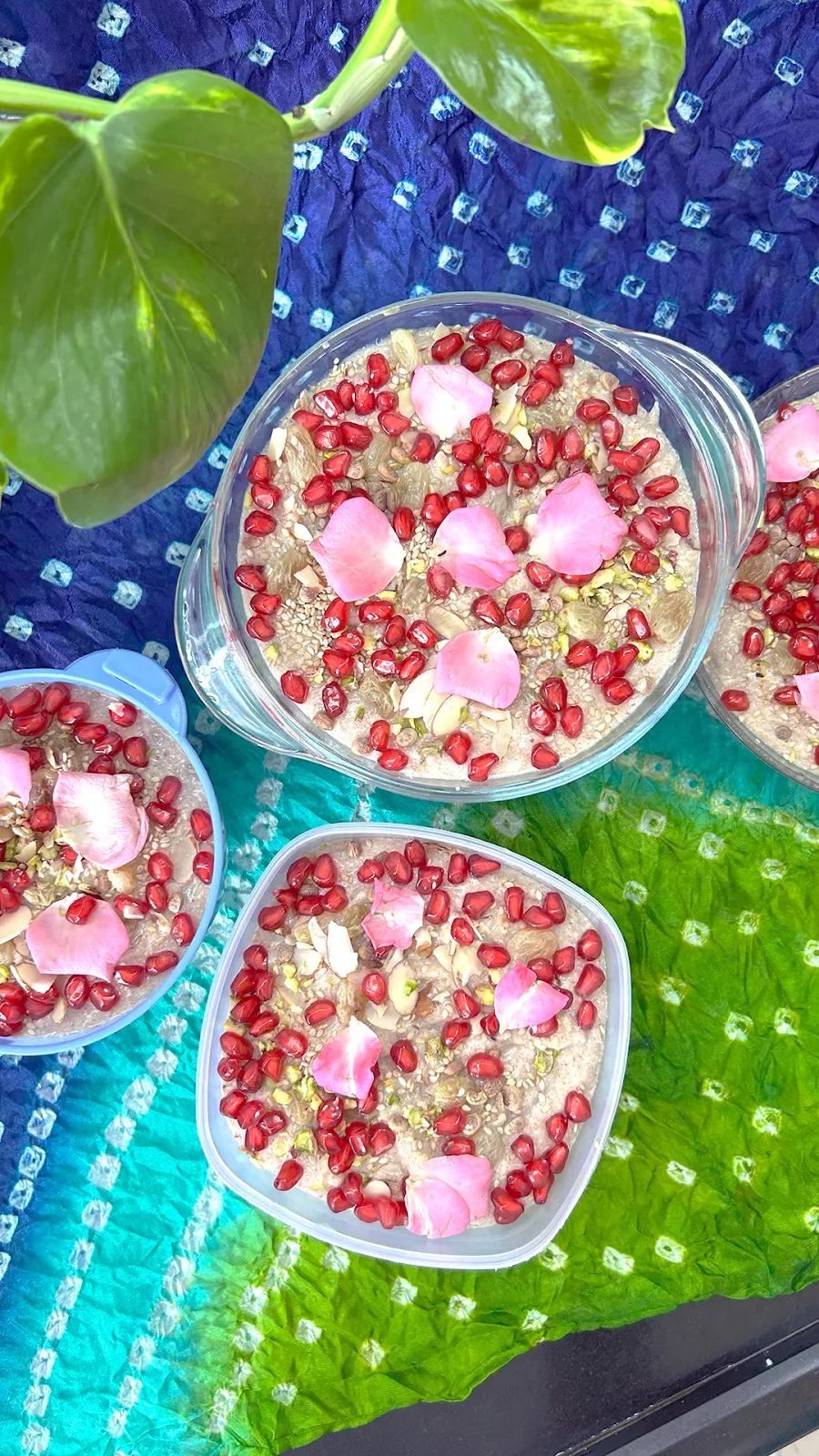
  7. Transfer to a serving bowl or individual portions. Garnish with pomegranate, sliced almonds, pistachios, raisins and a few rose petals, if using.
  8. Serve well chilled.
Nutrition Facts (Per 100 gms servings)
Nutrient (Basic) Amount (Approx.)
🔥 Calories198 Kcal
💪 Protein3.6 g
🌾 Carbohydrates30.5 g
🥑 Total Fat7.4 g
🧈 Saturated Fat4.5 g
🌱 Dietary Fiber2.1 g
🍬 Sugars20.8 g
🧂 Sodium32 mg

*Disclaimer: The nutritional values provided here are estimates generated for reference only and may vary based on exact ingredient brands and preparation techniques. Please calculate your nutrition independently if following a strict diet.

Chef's Note

Use naturally soft, good-quality dates: They give a deeper sweetness and better flavour than dates that are very dry or hard.

Tips & Tricks

Sweetness depends on the dahi: Since the tartness of dahi varies from batch to batch, adjust the final sweetness only after the dahi has been incorporated.

✨Kalamro✨

By Chefjuzer • •
🏷️ Category: Mithaas 🌱 Type: Vegetarian ⏱️ Prep: 15 minutes 🔥 Cook: 25–30 minutes
✨Kalamro / Kalamra✨

Creamy, grainy rice and yoghurt preparation sweetened naturally with gud and scented with rose water.

Kalamro, also known as Kalamra, is a traditional preparation where soft-cooked rice is gradually worked with gud, dahi, and rose water to create its characteristic creamy yet grainy texture.

The most important part of the preparation is the ghotai. Traditionally, the cooked rice is worked patiently with a wooden spoon, much like the way khichda is ghotaoed. This breaks down part of the rice while leaving some grains intact, giving Kalamra its distinctive texture.

It is a beautiful preparation to serve as part of a festive meal, especially when finished with kishmish, anar, rose petals, and dry coconut.

Ingredients List
People
💡 Adjust serving size to recalculate ingredients
Sr. Weight Units Name
For the Rice
• 250 g Sona Masoori rice, or rice of your choice
• 2 tbsp Ghee
• - A pinch of Salt
• - Water, as required
For the Kalamra
• 1.5 cups Thick chilled dahi
Gud, grated, to taste
• 2 tsp Ghee
• 2 tsp Rose water
Malai or fresh cream, optional
For Garnishing
Rose petals
• 0.5 cup Kishmish
• 0.5 cup Pomegranate seeds
Dry coconut (Sukha khopra), to taste
Method / Instructions
  1. Wash the rice once with water and soak it for 10 minutes. Meanwhile, bring plenty of water to a boil in a large cooking vessel. Once the water is boiling, add the soaked rice. Cook over high heat until the rice begins to boil well. Reduce the heat to low and add 2 tbsp ghee and a pinch of salt. Mix gently.
  2. Continue cooking until the rice becomes completely soft. Stir the rice occasionally, especially from the bottom, to prevent it from sticking to the vessel. If the water reduces while the rice is still firm, add a little more water and continue cooking. The rice should be noticeably softer than ordinary cooked rice. Once completely soft, remove it from the heat and allow it to cool. A little residual warmth is fine. The rice does not have to be completely cold.
  3. Transfer the cooled rice to a wide, open lagan or large vessel. Add the grated gud, 2 tsp ghee, and rose water. Using a wooden spoon, begin ghotai, working the rice just as you would while ghotaoing khichda. Keep working the mixture gently and patiently until the gud melts and blends into the rice.
  4. You may use a blender if required, but do not completely puree the rice. Kalamra should have a grainy yet creamy texture, with some rice grains still perceptible. Traditional-style ghotai gives better control over this texture.
  5. Add the thick chilled dahi gradually, a little at a time. Continue ghotai gently after each addition until the dahi is well incorporated. Once the mixture is smooth, creamy, and evenly combined, add malai or fresh cream if desired. Mix gently.
  6. Transfer the Kalamra to a serving dish. Garnish according to your preference with rose petals, kishmish, pomegranate seeds, and grated or finely sliced dry coconut. Serve chilled or suitably cool.
Chef's Notes & Tips

Chef’s Notes

  • The rice must be cooked very soft. This is essential for achieving the right Kalamra texture.
  • Do not over-blend. The finished preparation should remain grainy and creamy, not completely smooth.
  • Add the dahi gradually during ghotai so you can control the final consistency.

Tips & Tricks

  • Use a wide vessel for ghotai. It gives you enough room to work the rice evenly.
  • If the cooked rice becomes too thick while preparing the Kalamra, a small amount of chilled dahi can be added to adjust the consistency.
  • For the best texture, use thick, chilled dahi rather than watery yoghurt.
  • Add the gud according to its sweetness and your preferred level of Mithaas.