
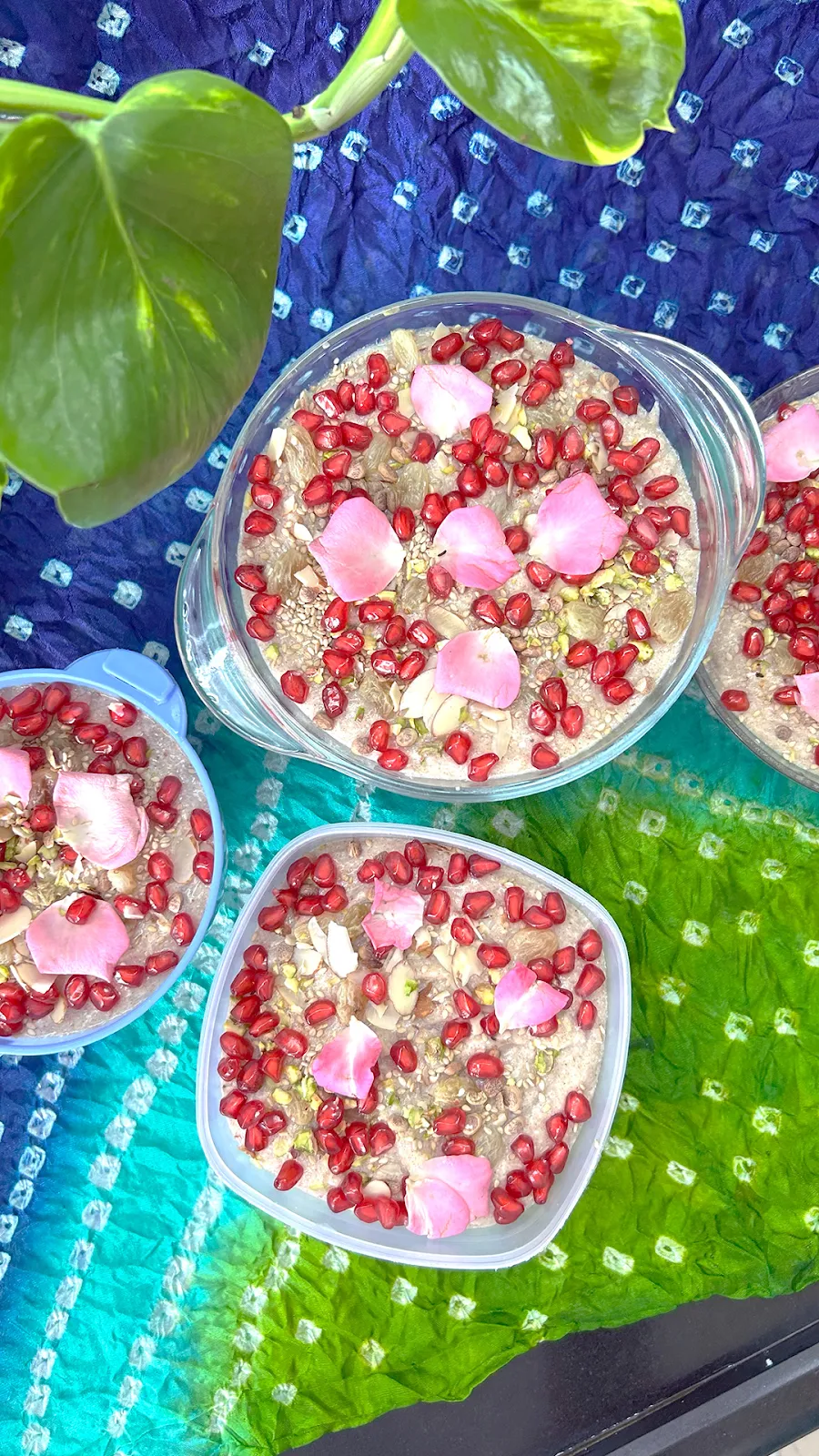
Kalamro is one of the simplest yet most cherished sweet preparations in our tradition. It is closely associated with Rabi ul Awwal and Milad un-Nabi, when families and communities come together in celebration. Traditionally, Kalamro holds a special place at these occasions, often served at the beginning of the meal as the mithaas, before the savoury courses. Its charm lies in its simplicity. Kalamro does not need elaborate cooking or extravagance to feel special. Its true identity comes from the occasion, the tradition of sharing, and the memories created around the table. Khajuri Kalamro is our interpretation of that tradition. The spirit of Kalamro remains rooted in our celebrations, while its sweetness takes a new form through khajur. The tradition remains the same. The mithaas takes a new form.
Ingredients List
| Sr. | Weight | Units | Name |
|---|---|---|---|
| For the Kalamro | |||
| • | 200 | g | Rice, washed and cooked until soft |
| • | 200 | g | Thick Full-Fat Dahi |
| • | 100 | g | Fresh Malai |
| • | 250 | g | Khajur Paste, or to taste |
| • | 1 | tsp | Rose Water |
| For Garnishing | |||
| Pomegranate – as required | |||
| Almonds – sliced, as required | |||
| Pistachios – sliced, as required | |||
| Raisins – as required | |||
| Rose Petals – a few, optional | |||
Method / Instructions
- 1. Wash the rice thoroughly and cook it until completely soft. Allow it to cool.
- 2. Transfer the cooked rice to a mixing bowl. Add the thick dahi, fresh malai and khajur paste.
- 3. Mix everything thoroughly until well combined. Add rose water and mix again.
- 4. Taste the Kalamro and adjust the amount of khajur paste according to the sweetness and tartness of the dahi.
- 5. Cover and refrigerate for at least 2 hours so that the Kalamro becomes properly chilled and the flavours settle.
- Garnish and Serve
- Transfer to a serving bowl or individual portions. Garnish with pomegranate, sliced almonds, pistachios, raisins and a few rose petals, if using.
- Serve well chilled.
Nutrition Facts (Per 100 gms servings)
| Nutrient (Basic) | Amount (Approx.) |
|---|---|
| 🔥 Calories | 198 Kcal |
| 💪 Protein | 3.6 g |
| 🌾 Carbohydrates | 30.5 g |
| 🥑 Total Fat | 7.4 g |
| 🧈 Saturated Fat | 4.5 g |
| 🌱 Dietary Fiber | 2.1 g |
| 🍬 Sugars | 20.8 g |
| 🧂 Sodium | 32 mg |
*Disclaimer: The nutritional values provided here are estimates generated for reference only and may vary based on exact ingredient brands and preparation techniques. Please calculate your nutrition independently if following a strict diet.
Chef's Note
Use naturally soft, good-quality dates: They give a deeper sweetness and better flavour than dates that are very dry or hard.
Tips & Tricks
Sweetness depends on the dahi: Since the tartness of dahi varies from batch to batch, adjust the final sweetness only after the dahi has been incorporated.
Community Comments & Reviews