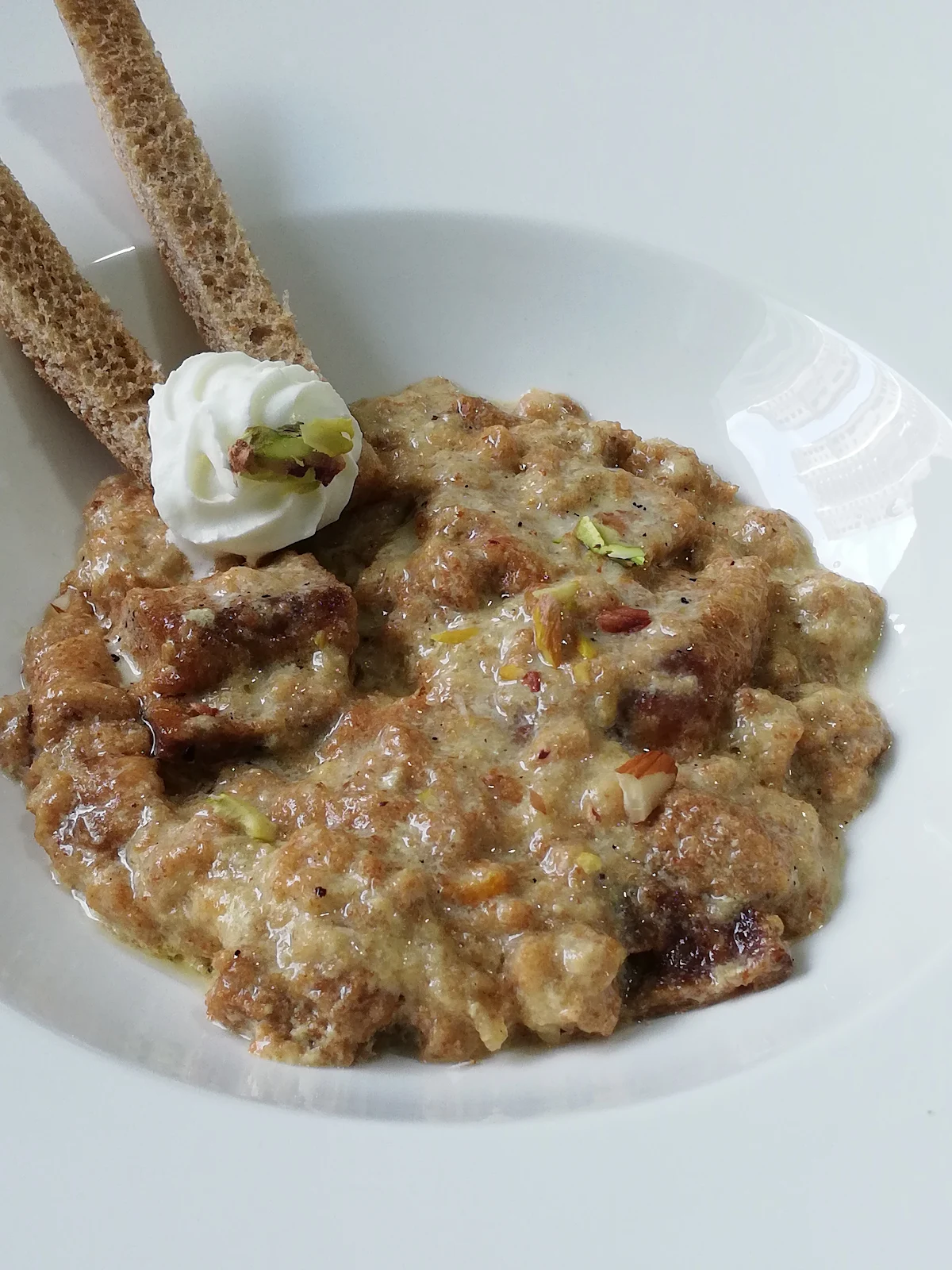
The story of Pav No Halwo belongs to the changing food culture of colonial India, when bakery-made bread, popularly known as double roti, became increasingly familiar in urban households. The word pav itself traces back to the Portuguese word pão, meaning bread, reflecting the influence of Portuguese baking traditions along India's western coast. One culinary tradition associated with this period tells of stale bread supplied to workers during colonial times, which was softened with milk and enriched with ghee and sugar to make it more palatable. This resourceful transformation is remembered as part of the story behind bread-based mithaas.
Over time, sweet preparations made with bread became part of several regional food traditions. Double Ka Meetha and Shahi Tukda are among the better-known examples, while Pav No Halwo carries its own identity in the use of pav. Although these preparations share a bread-based foundation, their histories should not be treated as one uninterrupted lineage. Pav No Halwo represents the creativity of Indian home kitchens, where an everyday staple was transformed into a celebratory mithaas.
Ingredients List
| Sr. | Weight | Units | Name |
|---|---|---|---|
| • | 6 | nos. | Pav buns (or white bread slices) |
| • | 200 | gms | Sugar |
| • | 240 | ml | Milk |
| • | 100 | gms | Pure Ghee |
| • | 1.5 | gms | Cardamom powder |
| • | 18 | gms | Chopped nuts (almonds, pistachios) |
| • | 18 | gms | Raisins |
Method / Instructions
- Tear the pav buns or bread into small pieces and keep aside.
- In a heavy-bottomed pan, heat the milk and add sugar. Stir continuously until the sugar dissolves completely to form a milky syrup. Keep warm.
- In another deep pan, heat ghee over medium flame. Add the torn bread pieces and roast gently until golden and crisp, allowing them to absorb the ghee.
- Slowly pour the warm milk over the bread mixture, stirring continuously to blend well and prevent lumps.
- Add cardamom powder, chopped nuts, and raisins. Cook on low heat, stirring constantly until the mixture thickens to a halwa consistency and the ghee starts to separate.
- Remove from heat and transfer to a serving dish. Garnish with extra nuts if desired. Serve warm or at room temperature.
Nutrition Facts (Per 100 gms servings)
| Nutrient (Basic) | Amount (Approx.) |
|---|---|
| 🔥 Calories | 370 Kcal |
| 💪 Protein | 5.0 g |
| 🌾 Carbohydrates | 50.6 g |
| 🥑 Total Fat | 16.8 g |
| 🧈 Saturated Fat | 9.4 g |
| 🌱 Dietary Fiber | 1.4 g |
| 🍬 Sugars | 31.7 g |
| 🧂 Sodium | 194 mg |
*Disclaimer: The nutritional values provided here are estimates generated for reference only and may vary based on exact ingredient brands and preparation techniques. Please calculate your nutrition independently if following a strict diet.
Chef’s Note
Pav No Halwo is fundamentally a bread-and-fat preparation. Its character depends on how well the bread is toasted in ghee before the milk is introduced. This initial stage develops the roasted flavour that distinguishes a good halwa from bread simply softened in sweetened milk.
The choice of bread changes the identity of the finished dish. Pav has a more substantial, slightly elastic crumb, whereas sliced white bread produces a softer, more uniform halwa. They are alternatives, but they do not deliver identical results.
The quantity of ghee is significant in this recipe. It contributes not only richness but also carries the roasted aroma through the finished preparation. The objective is a well-coated, cohesive halwa, not a greasy one.
Tips & Tricks
Avoid using very fresh, extremely soft pav if you want the halwa to retain some texture. Slightly rested pav is easier to handle and generally gives a more controlled result.
Chop the nuts according to the texture you want in the finished halwa. Finely chopped nuts distribute flavour throughout, while slightly larger pieces provide distinct bites.
Adjust the final consistency with the understanding that the halwa will become firmer as it cools. Taking it too far on the heat can leave it heavy and dry when served.
Community Comments Reviews