
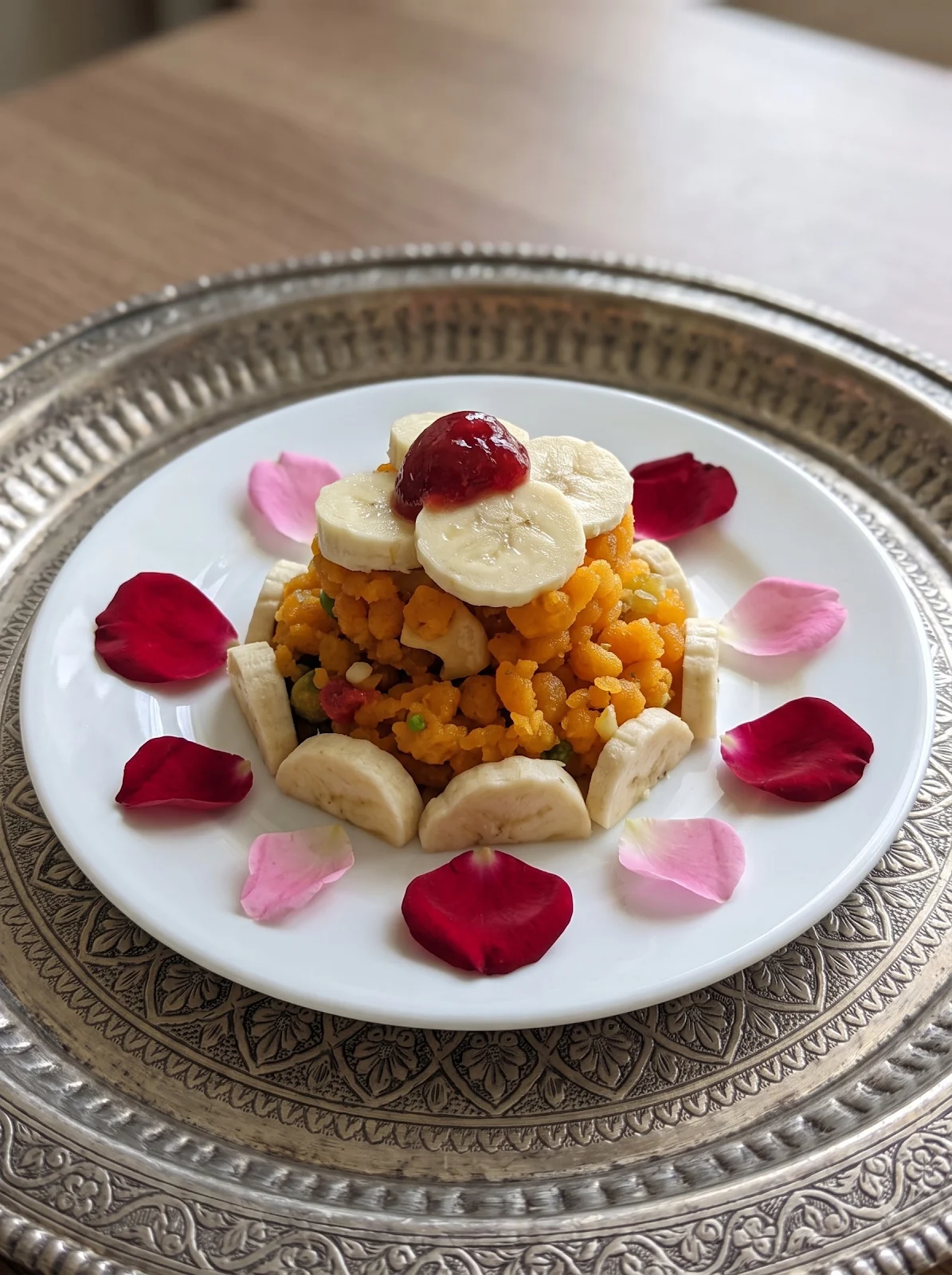
Boondi has long been part of India's everyday sweet-making culture. Made from tiny droplets of besan batter fried in oil and sweetened with sugar syrup, it is an inexpensive confection that can be prepared with a few basic ingredients. Unlike elaborate mithaas, sweet boondi has also enjoyed a place in street-food culture, making it accessible to people across different economic backgrounds.
Boondi Kela carries a more personal Bohra food memory. According to the community recollection associated with this preparation, during periods of drought and food scarcity, simple combinations of available foods helped satisfy hunger and sweet cravings. Sweet syrup-coated boondi, made from economical besan, was paired with banana to make a more substantial serving. What began as a modest combination eventually found a place in Bohra food culture and became a much-loved household favourite. It is a reminder that food traditions are not always born in royal kitchens or festive celebrations; some grow out of necessity and are preserved through generations.
Ingredients List
| Sr. | Weight | Units | Name |
|---|---|---|---|
| • | 100 | gms | Besan (gram flour) |
| • | 180 | ml | Water |
| • | 0.75 | gms | Baking soda |
| • | 200 | gms | Sugar |
| • | 120 | ml | Water (for syrup) |
| • | 0.75 | gms | Cardamom powder |
| • | 5 | ml | Rose water or a few strands of saffron |
| • | 2 | nos. | Bananas, sliced |
| • | 15 | gms | Pumpkin seeds |
| A pinch of yellow or orange food color | |||
| Oil, for deep frying | |||
| Rose petals | |||
| Silver leaf | |||
Method / Instructions
- Combine sugar and water in a saucepan and heat over medium flame, stirring until the sugar dissolves. Add cardamom powder and rose water or saffron, if using. Boil for 5–6 minutes until the syrup is slightly sticky but not at single-thread consistency. Turn off the heat and let it cool for 2–3 minutes. Set aside.
- Sift besan into a mixing bowl. Add baking soda and food color, if using. Gradually whisk in water to form a smooth, lump-free batter that is slightly thinner than pancake batter.
- Heat oil in a deep pan over medium heat. Test by dropping a little batter into the oil; it should rise immediately without darkening. Hold a boondi jhara 3–4 inches above the oil, pour the batter onto the ladle, and let it drip naturally into the oil. Fry for 30–40 seconds until just cooked and light golden, avoiding over-frying. Remove with another ladle or sieve and drain on a colander.
- Add the warm boondi to the slightly warm syrup and mix gently to coat evenly. Cover and let rest for 1–2 hours, stirring occasionally. Strain out any excess syrup using a colander.
- Mix in pumpkin seeds for texture. Plate with fresh banana slices and garnish with rose petals and silver leaf for a festive touch.
Nutrition Facts (Per 100 gms servings)
| Nutrient (Basic) | Amount (Approx.) |
|---|---|
| 🔥 Calories | 314 Kcal |
| 💪 Protein | 5.2 g |
| 🌾 Carbohydrates | 55.7 g |
| 🥑 Total Fat | 8.8 g |
| 🧈 Saturated Fat | 1.3 g |
| 🌱 Dietary Fiber | 3.2 g |
| 🍬 Sugars | 42.5 g |
| 🧂 Sodium | 49 mg |
*Disclaimer: The nutritional values provided here are estimates generated for reference only and may vary based on exact ingredient brands and preparation techniques. Please calculate your nutrition independently if following a strict diet.
Chef’s Note
Boondi is a product of batter rheology and frying precision. The viscosity of the besan batter determines the size and shape of each pearl, while the height of the jhara and the temperature of the frying medium influence how cleanly the droplets form. Consistency across the pearls is essential for uniform frying and syrup absorption.
The distinction between well-made sweet boondi and an ordinary syrup-soaked mixture lies in controlling moisture migration. The fried pearls must be cooked through without becoming excessively hard or oily, and the syrup must penetrate sufficiently to sweeten them without leaving them waterlogged.
Boondi Kela is best understood as a combination of two contrasting textures and natural sweetness levels. The syrup-coated besan pearls provide concentrated sweetness, while banana contributes a soft, mellow fruit character. The balance between the two is what gives this humble combination its appeal.
Tips & Tricks
Use bananas that are fully ripe but still firm. Overripe bananas release moisture quickly and can turn the plated combination mushy.
Do not judge the syrup-soaked boondi immediately after mixing. The pearls continue absorbing syrup as they rest, so the final sweetness and texture develop over time. Drain excess syrup before serving.
Humidity is the enemy of crisp fried boondi. If you want to retain some texture in the pearls, avoid prolonged exposure to syrup and assemble the banana and boondi close to serving time.
Community Comments Reviews