
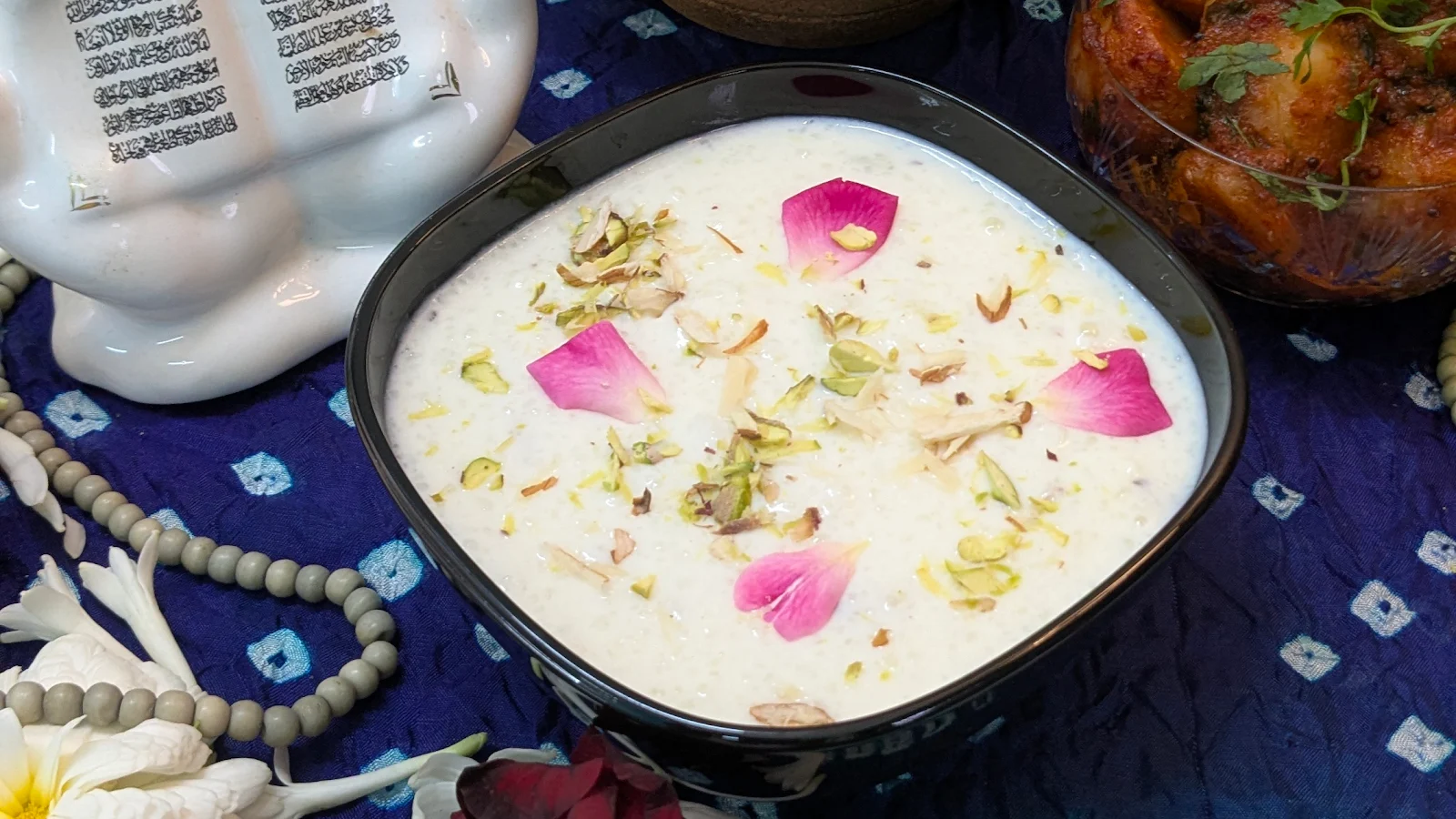
Kheer has a long recorded history in the Indian subcontinent. One early written reference appears in the Mānasollāsa, a 12th-century Sanskrit encyclopaedia commissioned by King Someshvara III of the Western Chalukya dynasty. It documents Payasa among the dishes of royal cuisine.
Across India, the same family of desserts is known by different names: Kheer in the North, Payasam in much of the South, Payesh in Bengal and Payesa in Karnataka. These regional names reflect how the dish became part of diverse local food cultures.
Kheer also carries ceremonial significance. It is served during festivals and auspicious family occasions, while related preparations are offered in temples as bhog and shared afterwards as prasad. In Bengal, Payesh has a special place in the Annaprashan ceremony, marking a child’s first introduction to solid food.
Ingredients List
| Sr. | Weight | Units | Name |
|---|---|---|---|
| • | 1 | litre | Fresh Full Cream Milk |
| • | 50 | gms | Short Grain Basmati Rice |
| • | 15 | ml | Warm Milk For Soaking Saffron |
| • | 7.5 | gms | Pure Ghee |
| • | 2.5 | gms | Cardamom Powder |
| • | 2 | tsp | Rose Water |
| • | 1 | gm | Saffron Strands |
| Sugar As Per Taste | |||
| | Few Strands Of Saffron, Almonds, Pistachios, Cashews, Raisins For Garnish | |||
Method / Instructions
- Soak and prepare the rice: Soak rice in water for 2 Hrs. Then strain using muslin cloth and spread on a kitchen towel to dry completely. Once dried, coarsely grind using a mortar and pestle. Set aside.
- Start the base: Heat ghee in a thick-bottomed saucepan over medium-low heat. Add ground rice and sauté gently for 1 minute to coat it in the ghee.
- Add milk and cook: Pour in the milk and stir continuously for 2–3 Minutes. Increase the heat and bring the milk to a boil while stirring.
- Simmer and reduce: Once milk rises and is about to spill, reduce to low heat and continue stirring. Frequently scrape down the sides and bottom of the pot to prevent sticking or burning.
- Slow cooking: Let the milk simmer slowly, stirring occasionally, until it reduces to about 70% of its original volume and turns pale. The rice should be soft and completely cooked.
- Finish the kheer: Add sugar as per your taste, then stir in soaked saffron, cardamom powder, and rose water. Simmer for another 2–3 Minutes.
- Serve: Garnish with chopped nuts, raisins, and a few saffron strands. Serve warm with puris or chilled as a dessert.
Nutrition Facts (Per 100 gms servings)
| Nutrient (Basic) | Amount (Approx.) |
|---|---|
| 🔥 Calories | 138 Kcal |
| 💪 Protein | 3.4 g |
| 🌾 Carbohydrates | 18.2 g |
| 🥑 Total Fat | 5.8 g |
| 🧈 Saturated Fat | 3.6 g |
| 🌱 Dietary Fiber | 0.3 g |
| 🍬 Sugars | 12.4 g |
| 🧂 Sodium | 44 mg |
*Disclaimer: The nutritional values provided here are estimates generated for reference only and may vary based on exact ingredient brands and preparation techniques. Please calculate your nutrition independently if following a strict diet.
Chef’s Note
Par-roasting the coarsely ground basmati rice in pure ghee creates a barrier that prevents the grains from turning into a mushy paste.
Slow-reducing the milk until it develops a pale, creamy hue maximizes the natural milk solids for a luxurious, velvety mouthfeel.
Tips & Tricks
• Dry the soaked rice completely on a towel before grinding to ensure you get clean, coarse fragments instead of a fine flour.
• Scrape the sides and bottom of the pan constantly to integrate the caramelized milk crust back into the simmering kheer.
Wow recipe
ReplyDelete